Most visitors leave. That’s just the reality of running a website in 2026. Around 70% of people who land on your page will exit without buying, subscribing, or doing anything at all. So, what is an exit-intent popup and how can they stop that from happening? Exit-intent popups were built specifically for that moment. They’re still one of the most effective conversion tools available. This guide covers everything: how they work, what’s changed, and how to actually set one up today.
What Is an Exit-Intent Popup in 2026?
An exit-intent popup is a website overlay that appears when a user is about to exit a website. This popup is triggered by user behaviours such as a mouse moving to the close button or address bar, or a dramatic drop in engagement on a page. Exit-intent popups reduce cart abandonment, which is why they are one of the highest converting popups. Here is your guide to using them effectively in 2026.
Today’s Technology Behind Modern Exit-Intent Detection
How do websites know you’re about to leave? Today’s exit-intent popups are even better at understanding user’s behavior. Technology has advanced. Traditional mouse tracking is still relevant, but pop-ups have evolved. Understanding today’s exit-intent popups means understanding exit-intent triggers.
Mobile First Popups
More and more people are viewing websites on their mobiles, which means exit-intent popups need to be adaptive and fit the new screens seamlessly.
AI behaviour prediction
Popups today use AI behaviour prediction and gesture recognition, moving beyond their traditional use. Instead of waiting for someone to move their mouse to the exit button, AI predicts they’re going to leave based on their behavior patterns from the moment they land on the page.
Scroll Velocity Patterns
It is not just about the direction that the cursor is moving, but also the speed. When the scrolling becomes fast, your user is moving with intention. They could be moving to leave your page. Rapid scrolling from up to down or the deadly stop indicates something is wrong. That’s when your exit-intent popup appears.
Engagement Decay Algorithms
Engagement predictions test whether a user is about to leave. This algorithm watches for tipping points; they understand that the time between clicks, mouse movement patterns, and tab switching is all telling a story. For example, the user clicks on internal links less frequently, they pause midpage, or suddenly, there is no movement. These are engagement metrics, and they can trigger an exit-intent popup.
What Exit-Intent Popups Actually Convert in 2026 with Case Studies
What is an exit-intent popup? Exit intent is designed to reduce bounce rate, cart abandonment, and convert users. But when people in 2026 are experiencing popup fatigue, conversion is harder. Coupons and discount codes work best for cart recovery. Here is how converting exit-intent popups works:
Common Converting Exit-Intent Popups
1. Cart Recovery
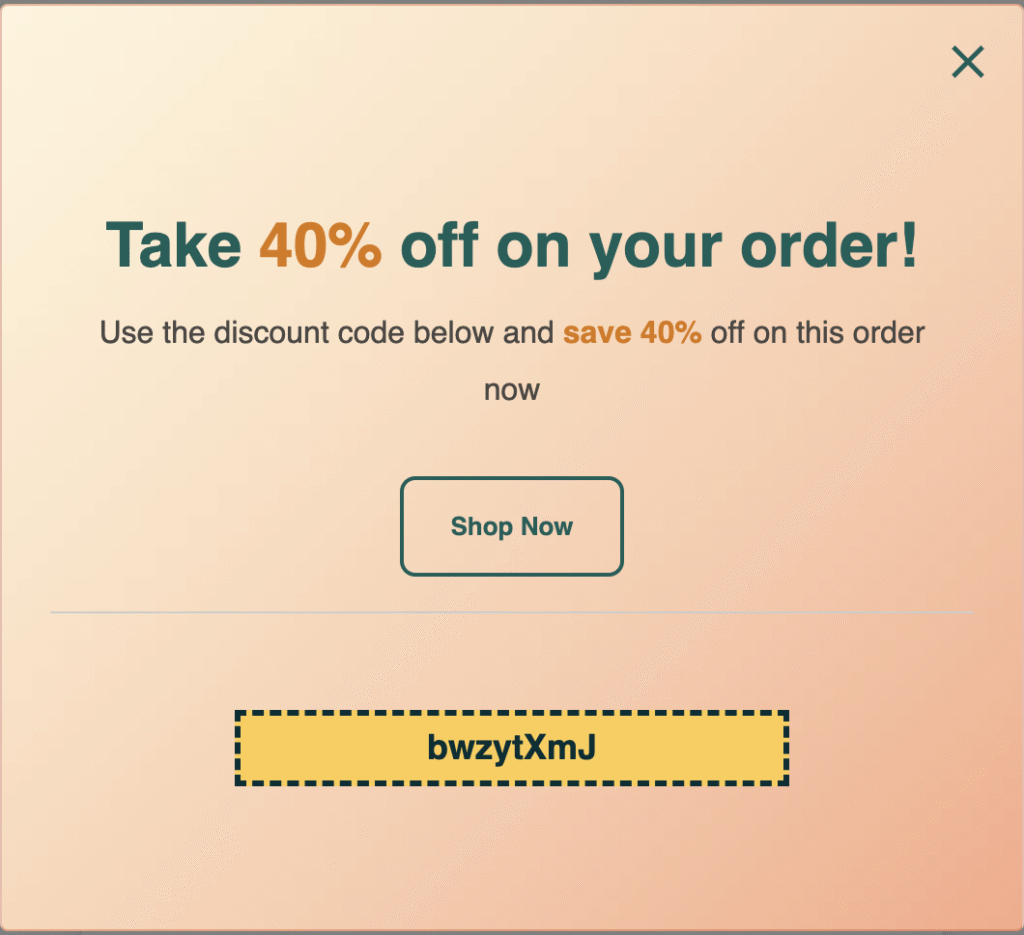
When a user is about to leave their shopping cart, the popup is triggered.
Offer: A coupon code to re-engage customers.
2. Promotional Offers
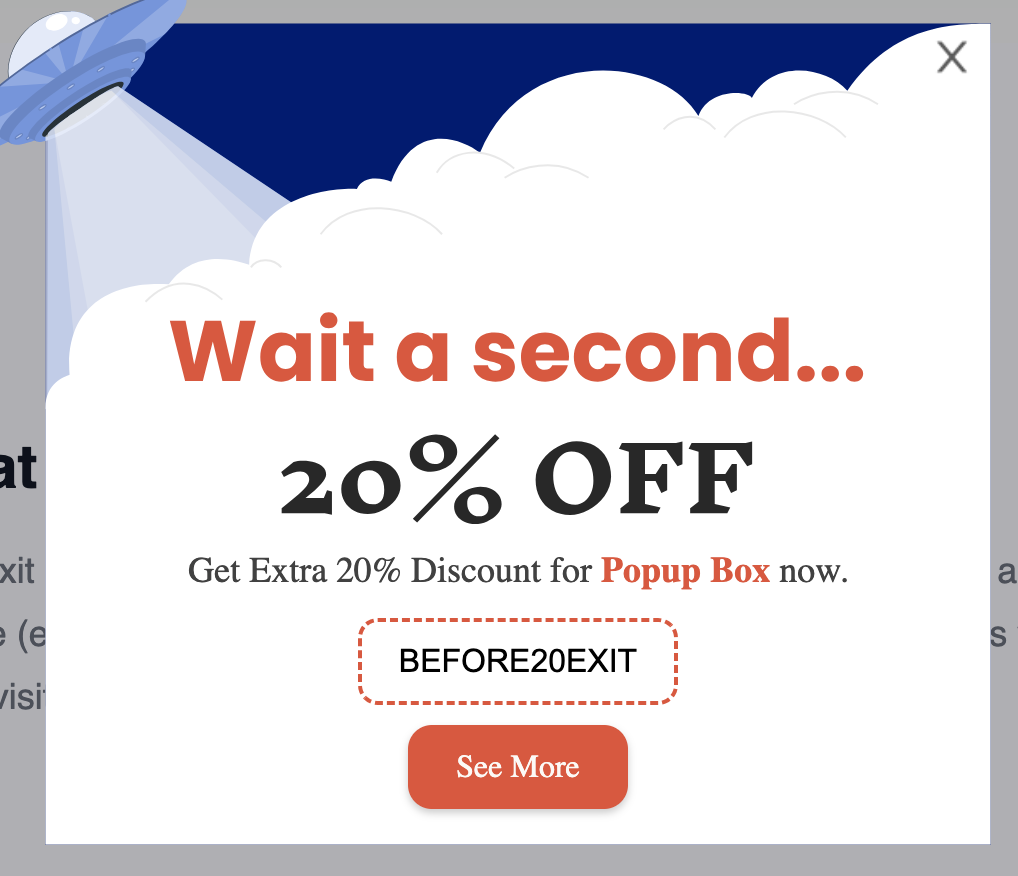
Show a special last-minute deal.
Offer: A discounted rate on products before they leave.
3. Email Capture
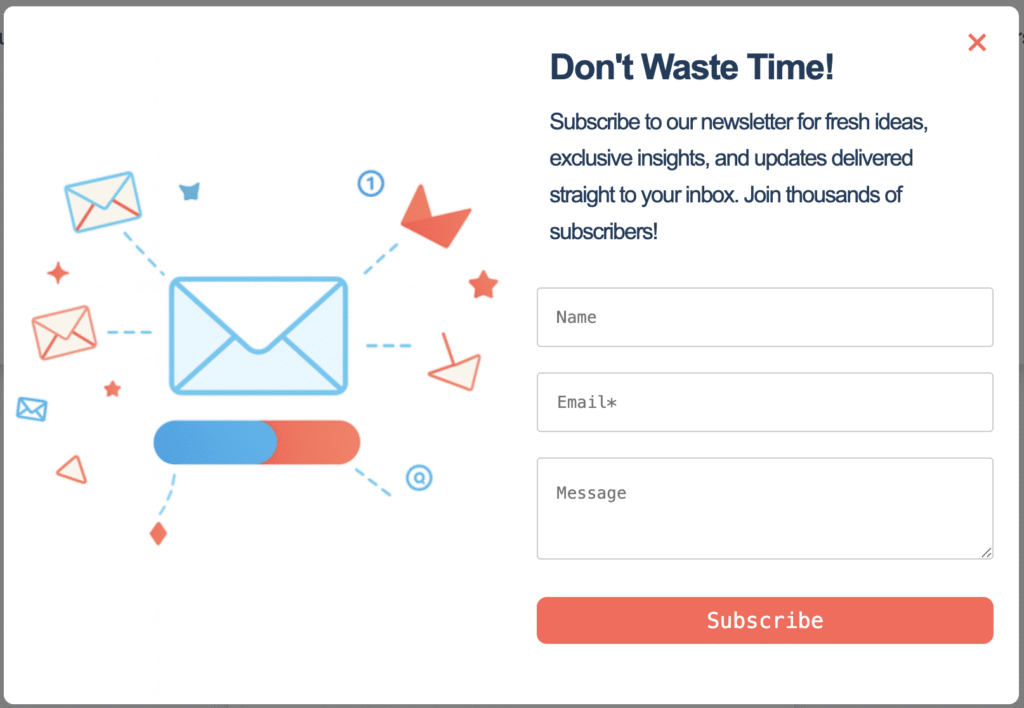
Get users to subscribe before they go.
Offer: Subscribe and use the “social proof” theory, or offer exclusive content.
Examples of Exit-Intent Popups Based on Industries
Here are examples of exit-intent popups based on 3 common industries today: e-commerce, Saas (Software as a Service), and content platforms.
Dynamic Discount Based on Cart Value for E-commerce
Each user gets personalized offers based on the value of their cart. The bigger the value, the bigger the discount.
Interactive product tours and micro-commitments
SaaS tools now use the exit moment to show a 60-second interactive demo. You try to engage them for an extra 1-minute before they leave, which is a micro-commitment.
The Substack Model
This is a very effective model that is applicable to content sites.
1. You read a preview of an article for free
2. Exit popup appears: “Get the full piece and weekly insights for free.”
3. You enter your email
4. Full access unlocked
How to Set Up High-Converting Exit-Intent Popups on WordPress
Setting up exit-intent popups will vary depending on your tools and CMS. This is how to set up an exit-intent popup using PopupBox, one of the most trusted WordPress plugins.
1. Go to your WordPress Dashboard.
2. Select Plugins on the menu on the side and press “Add New.
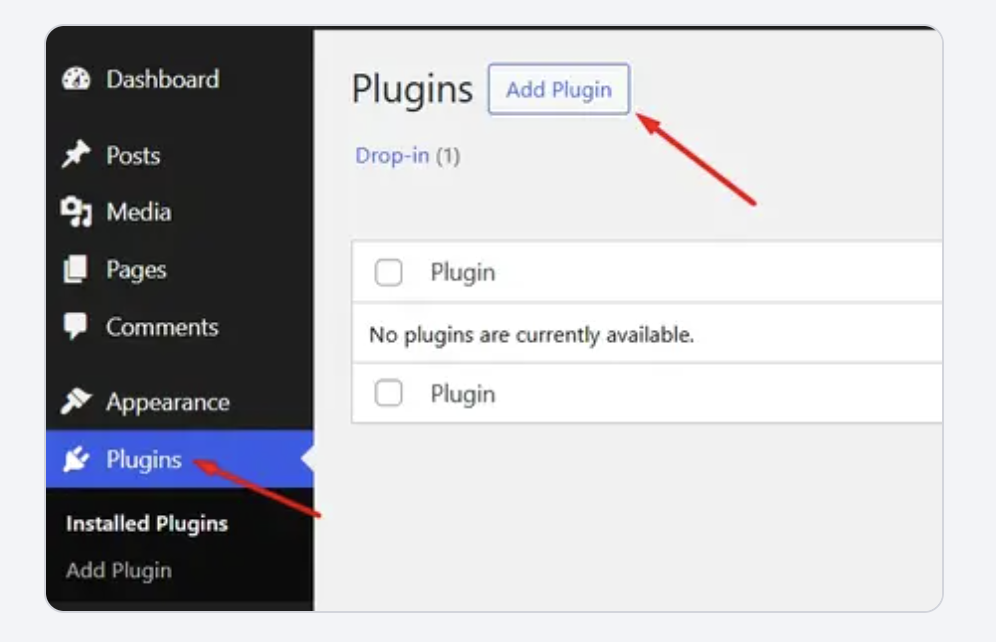
3. Search for the plugin, such as PopupBox.
4. Click Install Now, then Activate.
5. View the “PopupBox” menu item on the left side of your dashboard.
6. Click on PopupBox > Create Popup.
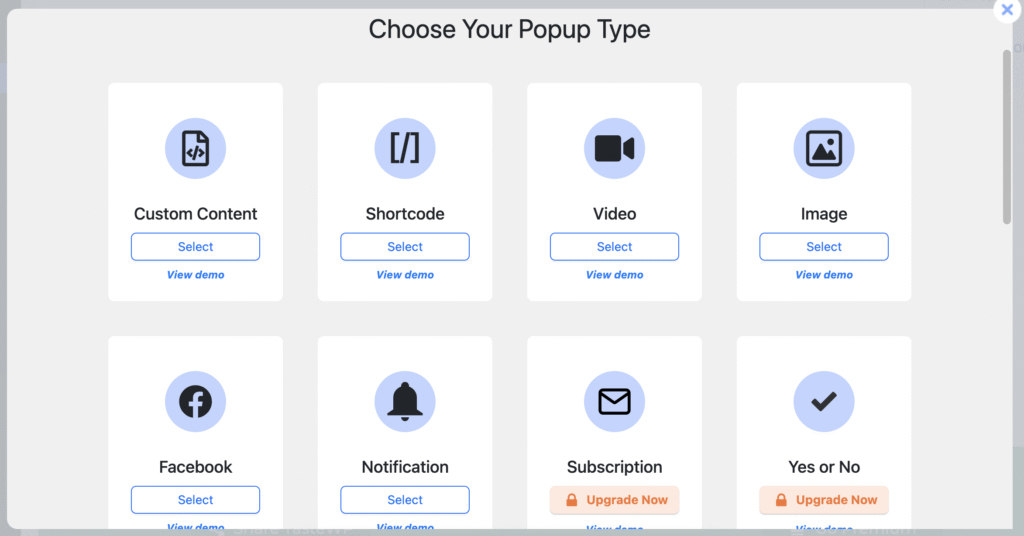
7. Choose your popup type.
8. Activate the exit-intent popup in the popup General settings.
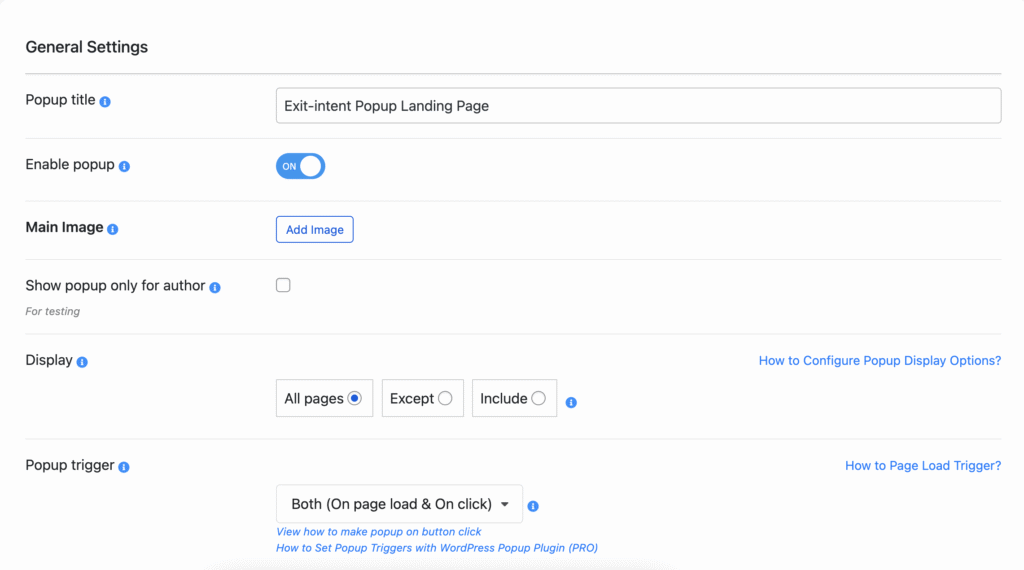
9. Once enabled, the popup will automatically appear when exit behaviour is detected.
10. Next, go to Display Options. Show on all pages, include only on selected pages, or exclude certain pages.
What to Read Next? What is a Popup in WordPress: The Ultimate Beginner’s Guide to Using Them (2026)
The Best Exit-Intent Popup Tools
Choosing the right exit‑intent popup tool in 2026 depends on your CMS, budget, and coding experience. Plugins allow you to easily add exit-intent popups to your CMS. Below, you can find the best plugin tools for exit-intent popups today.
| Tool | Starting Price | Best For | Privacy Compliant |
| PopupBox | Free / Paid Pro plan | WordPress users needing versatile popup types | Yes |
| OptinMonster | $9/mo | WordPress and SaaS | Yes |
| Privy | $15/mo | Shopify stores | Yes |
| ConvertFlow | $29/mo | SaaS and multi‑step funnels | Yes |
| Custom Build | $0 (development needed) | Developers needing full control | You control |
Best Practices and Psychology for Popups in 2026

There’s a reason exit-intent popups outperform most other popup types; they show up at exactly the right moment. Not after 8 seconds. Not after three page views. Right when someone decided to check out. But, they only convert if the popup works. So, what are the best modern practices when using exit-intent popups, and what is the psychology behind them today?
Best Exit-Intent Popup Practices Today
Timing is Less Relevant
Older advice said “wait 8 seconds” before showing anything. Not true anymore. Rather, look at scroll time, cursor movement, and content depth. Timing has become personalized, not fixed.
Make Your Messaging More Conversational
You should still have clear CTAs, but your message should feel less about sales and more conversational, leaning toward relationship building. Think friendly and short.
Example: “Leaving already? Want me to save your cart for later?” instead of, “WAIT! Don’t leave!”
Keep Your Design Clean
Think about elements like using large text and high contrast for accessibility. Move away from flashing elements or overcrowded designs, unless it is part of your branding. Remember, most users will see your exit-intent popup on their mobile.
The Thumb‑Friendly Rule
Mobile exit intent is tricky because there’s no mouse. Here, you may want to track movement, engagement time, and activity around the centre of the screen. Do not use full‑screen blockers. Keep your exit-intent popup minimal and clean for a mobile-first experience.
Think About Your Frequency
If someone closes the popup, don’t show it again when they visit your website for the second time. And if they convert, don’t show related popups.
Psychology That Works in 2026
Here are the top psychology triggers you should know to make your exit-intent popups even more effective.
1. Loss Aversion
People are more motivated by avoiding loss than by gaining something.
Example: “Don’t miss out! Last chance to get your 10% code.”
2. Social Proof
Visitors trust other people’s opinions, reviews, and verdicts; use them.
Example: “1,200+ people grabbed this deal today.”
3. Curiosity Gaps
Make the user wonder what comes next; create a curiosity gap.
Example: “Unlock a surprise upgrade?”
4. Instant Gratification
People love quick wins.
Examples:
- “Download now”
- “Apply discount instantly”
- “Save my cart”
Measuring Success and Optimization
Knowing your exit-intent popup is live is one thing. Knowing whether it’s actually working is another. The average popup conversion rate sits at around 3.09%. But the best-performing ones hit 10% or higher. That gap doesn’t happen by accident.
Track these metrics specifically:
- Conversion rate per popup type
- Close rate (how often people dismiss it)
- Revenue recovered per campaign
- Email quality score if you’re capturing leads
Review your popups monthly and aim to get 1% better every month.
1) Try A/B testing
2) Use different trigger types
3) Experiment with CTAs
4) Experiment with design
5) Experiment with your offerings
Before You Exit This Blog
We’ve answered the question, “What is an exit-intent popup?” But, before you exit this page, the one thing worth taking away is this: the best exit-intent popups in 2026 don’t feel like popups. They feel like the right message at the right moment. Get that right, and the conversions follow.
FAQs: Exit-Intent Popups
An exit-intent pop is a website overlay that is triggered when a user is about to leave a page. They can help with cart recovery, display promotional offers, and lead to email captures.
Exit-intent popups are the most effective popups at converting users because they are the most targeted popups. They are shown to users at a pivotal moment and are very popular amongst e-commerce stores. Click-triggered popups also have a very high conversion rate.
Exit-intent popups generally do not work as effectively on iOS 18. Popups on these devices will have to rely on alternative triggers like scrolling or tab switching.
Wisepops says AI-powered popups show up to a 15.98% conversion rate.
Yes. But make sure you have prompted ChatGPT according to your objectives, TOV, and the best practices for creating popups today.
PopupBox is the best choice for WordPress users. The plugin tool offers a flexible, affordable popup that supports exit-intent triggers.